
I finally have the guide so many of you have been asking for. And no, this isn’t the typical “10 things to do in Bali in 5 days” you’ll find on every Pinterest blog. This is the guide I wish I’d read before deciding to move here. The one that tells you the beautiful parts, yes, but also the practical ones. The uncomfortable ones. The things you only understand once you’ve been on the island for more than a week.
If you’re thinking about traveling to Bali, I want to tell you about it from someone who actually lives here. Not from someone who came for seven days, took three photos on a swing, posted a reel with “spiritual” music, and left saying “Bali changed my life.” I mean yes, Bali can change your life. But it can also frustrate you, confuse you, and teach you things you weren’t expecting. And that, too, is part of the charm.
The first thing you need to understand (this is key)
Bali isn’t a huge island… but it feels way bigger than it actually is. For context: Costa Rica is almost nine times bigger than Bali. Yes, nine times. And still, Bali can feel endless because distances here aren’t measured in kilometers. They’re measured in traffic.
Getting from the south to the north can easily take three to four hours. The roads aren’t wide, straight highways. They’re smaller roads packed with motorbikes, trucks, ceremonies that close streets, tropical rain that appears out of nowhere, and never-ending mountain curves. That trip Google Maps shows as “only 60 km” can turn into an entire day of transit very easily. That’s why planning your route isn’t optional. It’s absolutely essential if you don’t want to spend your whole trip inside a car.

My Canggu bubble…
When I first moved to Bali, I settled in Canggu. I know. I know. Before you judge me…let me explain.
I’ve stayed here way longer than I ever planned. I built my little bubble: my routine, my favorite cafés, my gym, my sunset walks by the ocean, the restaurants where they already knew my name and my order. It felt familiar. Safe. Mine. I know that’s not very Sagittarian of me, but hey… people evolve (words by my nephew).
Canggu is predictable and very comfortable. It’s practical. It’s easy. It has everything you need to build a life here. A stable one. Even a glamorous one, if that’s your vibe. And that’s exactly why it’s so easy to never leave. But the harsh reality is that Bali isn’t just Canggu.
Yes, I did the usual weekend escapes everyone does — Uluwatu, Ubud — but nothing beyond that. Nothing that really pushed me out of the comfort zone I had created. At some point, I realized I was living in the international version of the island. The curated version. The one with smoothie bowls, coworking spaces, stunning pool villas, aesthetic gyms and Pilates studios, and sunset DJ sets.
And I had moved all the way to Indonesia… to experience a bubble that, in theory, could almost exist anywhere? (Although honestly, I don’t think there’s anything like it, but that’s a debate for another time and a separate blog.) That’s when I knew it was time to step beyond what was convenient and start discovering the side of the island that doesn’t revolve around oat milk and beach or wellness clubs.
The 3 weeks that changed my perspective
I knew it was something I needed to change, so I took three weeks with no rigid schedule, no itinerary, and most importantly no constant anxiety of “I have to see everything.” Just curiosity. Just the desire to step out of what I already knew. I traveled across the island from north to south and east to west, including some nearby islands. I stayed in areas I had never even considered before. I woke up to mist-covered volcano views.
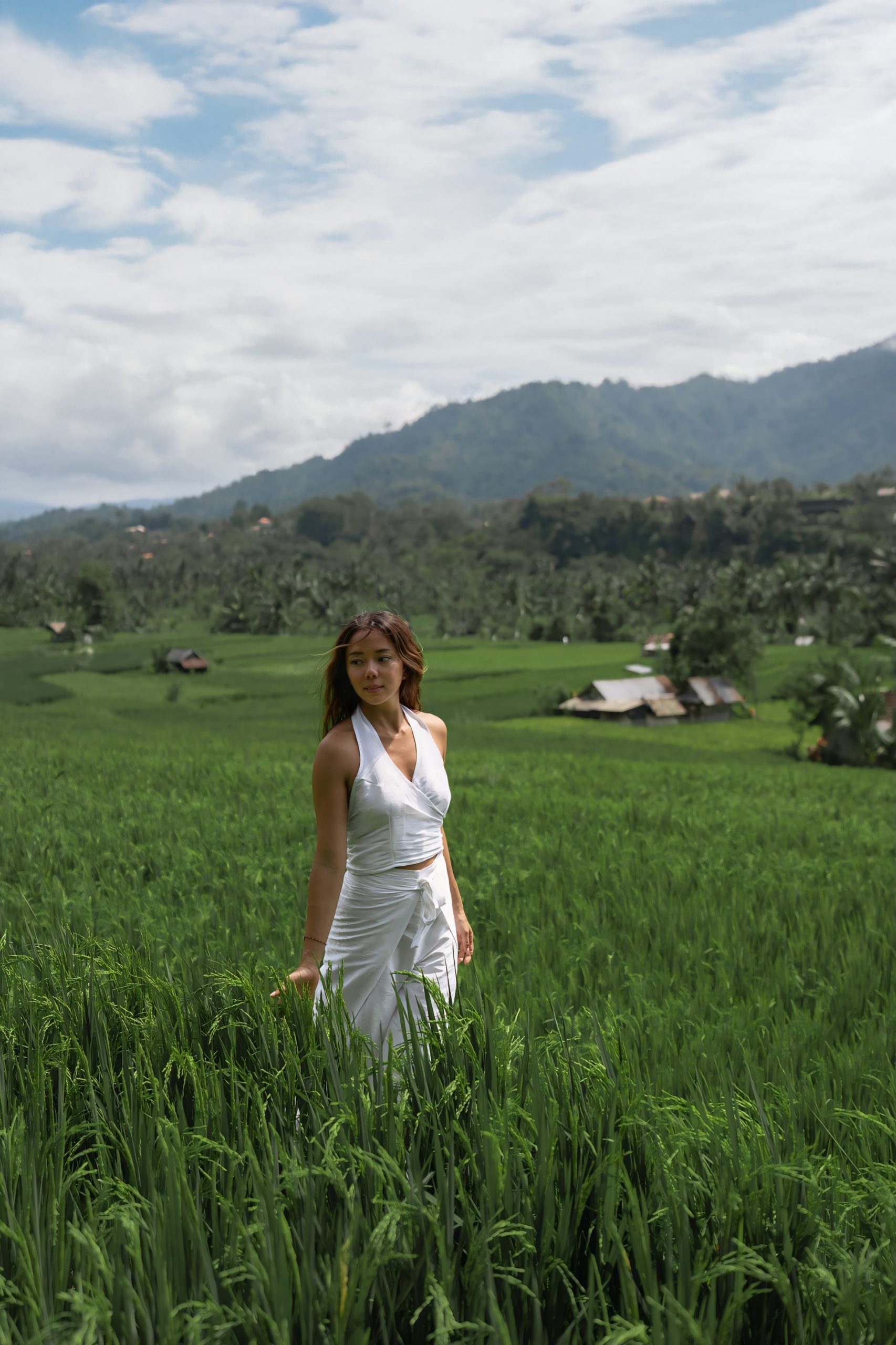
I drove through rice fields, small villages, and mountain roads where the air felt completely different. Some days were turquoise water days. Other days were long walks through green landscapes without seeing almost anyone around. And I understood something very clearly: Bali isn’t one thing. It’s many. And depending on how you travel it, it can show itself in completely different ways. This guide comes from those three weeks, but also from my life here. From the mistakes I made in the beginning. From the places that surprised me. And from the ones that made me rethink what I thought “Bali” was.

Things you need to know before booking your trip:
When is the best time to visit?
Bali has two very distinct seasons:
- Dry season:April to October
- Rainy season:November to March
Personally, I recommend May, June, and September. The weather is beautiful, there’s sun almost every day, and you’re not yet in the absolute chaos of July and August (European high season). Rainy season doesn’t mean it rains all day. It’s more like intense tropical storms that pour hard, then the sun comes back like nothing happened.
But if you’re only coming for a few days and want to maximize beaches and road trips, try to avoid January and February, which are usually the heaviest months of intense rain. Also, if your plan is to explore the north or mountainous areas, dry season makes everything much easier.
Do I need a visa?
This depends on the country you’re visiting from. Many Latin American countries do require a visa (for example, a Costa Rican passport), and you need to arrange it before arriving. Luckily for me, I also hold a Taiwanese passport, which makes things much easier. I’m eligible for a 30-day Visa on Arrival, and I can extend it for another 30 days for around 750,000 IDR (roughly $45–$50 USD).
The only catch? If you decide to extend, you’ll need to pay the fee and usually visit an immigration office to take a photo and complete the process. It’s not complicated, just something to plan for.
If you need to extend, I recommend doing it through my agent because it saves you time and makes the process much easier. If you need to apply for your visa (because you’re not eligible for visa on arrival), especially if it’s your first time in Indonesia and you don’t want to deal with the stress, I recommend using my agent.
She’s completely legitimate, works very professionally, and accepts online payments, which makes the process much easier if you’re outside of Indonesia. It has worked very well for me, and I prefer recommending something I’ve personally tried. She can also help you extend your visa if you decide to add more days to your trip.
Data / eSIM
You can sort this out right at the airport after you exit customs. As soon as you walk out, you’ll see several eSim counters where you can set everything up in minutes. Yes, there are plenty of online companies where you can buy an eSIM before traveling (Holafly, Airalo, Maya Mobile). But honestly? I recommend getting a local eSIM instead. It usually offers better coverage, allows you to make local calls (which can be helpful in emergencies), the data plans tend to last longer, and most importantly for me it’s significantly cheaper.
I always use Telkomsel. It’s much more affordable. To give you an idea of pricing: I paid 500,000 IDR ($32) for a 40 GB plan. Important tip: you can usually get your eSIM for the length of the visa you were given. If you’re going to extend, get it for 3 months right away. If you need more time than that, you’ll have to do a process with immigration so they can give you a paper that allows the provider to sell you a longer plan.
Local currency
Indonesia uses the Indonesian rupiah (IDR) and the first time you see the prices… you’re going to feel like a millionaire!
Quick reference: 1 USD ≈ 15,000–16,000 IDR. So a bill of 150,000 IDR sounds insane, but it’s actually around $10 USD.
Tip: withdraw cash from ATMs at major banks like BCA or Mandiri, and avoid sketchy exchange booths. Many ATMs have a withdrawal limit of 2–2.5 million IDR per transaction (around $125–$165 USD), so if you need a larger amount, you’ll likely have to make a few withdrawals. Personally, I almost never carry much cash so ATMs work perfectly for me. Most places across the island accept cards (and many also take Apple Pay), but you’ll still want some cash for more local spots: small warungs, temple offerings, parking attendants, and sometimes tours or drivers where paying in cash can even be cheaper.

How do you get around Bali?
First things first: download Grab and Gojek as soon as you land. They’re the essential apps here. They work like Uber, but Southeast Asia version. You’ll use them for everything: motorbike rides, cars, food delivery, groceries, even pharmacies. They make your life so much easier.
From the airport
As soon as you leave customs, you’ll see official taxi companies offering rides. They work and they’re not insanely expensive, but usually Grab or Gojek is cheaper. For context: a private taxi from the airport to Uluwatu can cost $25–$30 and normally takes about an hour… but with traffic it can be 3–4 hours. To catch a Grab or Gojek, just walk out of arrivals and keep going to the end (after you pass the people holding signs), and you’ll clearly see the sign that says: “Grab / Gojek Pick Up Point.”
The most practical option: motorbikes
Especially in the south (Canggu, Uluwatu, Ubud), motorbikes are the most practical. They’re fast, cheap, and they move through traffic when cars are completely stuck. A 10–15 minute ride can cost $1–$2. I personally don’t drive a motorbike here, even though I know how. I just honestly don’t want that stress. Driving in Bali is… a whole different world. There’s no clear logic. Motorbikes come from everywhere, people cut in without signaling, they drive crazy, sidewalks aren’t for walking… they’re for motorbikes. It’s its own ecosystem and, personally, it stresses me out. Seriously, driving in Bali is almost an art and I’d rather trust that art to locals or drivers who do this all day. I’m very happy in passenger princess mode.
Tip: always wear a helmet. I know. It’s not the most aesthetic accessory for your Bali content (and yes, I know you’re filming everything.. like every Bali first-timer does). I get it. But I’ve seen enough accidents here to say this clearly: you do not want your trip to take a turn because you skipped a helmet for a cute video. One second is all it takes to change everything.
For long distances: hire a driver
If you’re planning longer routes from the south to the north, moving luggage, or doing a road trip around the island, hiring a driver can be one of the best decisions you make.
For my three-week trip, I hired a driver on several days, and it was one of the best choices. I didn’t have to think about directions, traffic, or parking. I just looked out the window and enjoyed the scenery. And compared to other countries, hiring a driver in Bali is quite affordable, especially if you split the cost between several people. In my case, I did it solo, and for each route he charged me around $25–$30, and we’re talking about almost 2–4 hours of driving.
In my opinion comfort matters when you’re spending hours on the road. If you’d like the contact of the driver I used, I’ll leave it here. He was respectful, punctual, and the car was very spacious, air-conditioned, and comfortable.
Can you drink tap water?
Never! Don’t drink the tap water. I’m serious.
You can end up with the infamous “Bali Belly,” a stomach infection that can send you straight to bed for several days. I only drink bottled water and I’m careful with ice in very local places. In well-established restaurants it’s generally fine, but it’s still better to ask or avoid drinks with ice if you’re unsure.
I’ve been living in Bali for over a year and, thank God, I’ve never had Bali Belly. I’ve heard of people getting it from food as well, since many fruits and vegetables are washed with unfiltered water.
And something almost no one mentions (especially for the girls): the water in Bali is hardcore. It has a high mineral content, like calcium and magnesium, which can make your hair feel drier or rougher, increase frizz, and leave your skin feeling dry or textured. You’ll notice it because hard water doesn’t let shampoo lather as much and it leaves mineral residue on your hair.
If you’re staying long-term, you’ll definitely feel the difference. It can be quite drying. If you’re booking a villa or Airbnb, ask whether they have a shower filter. It sounds like a small detail, but it makes a big difference.
Medical insurance (don’t ignore this)
I’m repeating this because it matters: if you’re traveling to Bali, get travel medical insurance. You can get treated here if something happens, but be ready to pay. Prices for foreigners can be high. A friend fell off a motorbike, injured her wrist, and just the consultation + medication was around $400 USD. Nothing serious. No hospitalization.
Between motorbike accidents, stomach viruses, or any unexpected situation, it’s better to be safe. You don’t want to be sick in Bali without coverage.

¿Hotel or Airbnb?
This is another question I get all the time, and the real answer is: it depends entirely on your budget and the kind of experience you want. Something people don’t understand until they arrive: in Bali you can find gorgeous hotels at prices that would be unthinkable elsewhere.
From $17 a night for really good, simple options… all the way to absolute luxury. And at the same time, there are incredible Airbnbs: private villas with pools, huge spaces, amazing design.
If you’re coming for a short trip: hotels are easier (daily service, zero hassle). If you’re staying longer: Airbnb can work better, especially if you want more space or privacy. I’ve done both. And honestly… it depends on the mood of the trip.

Culture and religion (this matters)
Indonesia is predominantly Muslim. Bali is the exception: most people here are Hindu.
And spirituality here isn’t decoration. It’s daily life. You’ll see offerings every morning in front of homes, shops, and restaurants. They’re sacred rituals. Watch where you step, if it happens by accident it’s not dramatic, but being mindful is a sign of respect.
There’s also a very special day called Nyepi, the Day of Silence. It’s the Balinese New Year, and the entire island literally shuts down for 24 hours. No flights, the airport closes (make sure you don’t travel that day), you can’t leave your hotel, no outside lights, no noise. It’s a powerful experience, but you need to know if it overlaps with your dates because it usually falls around mid-March (the date changes every year based on the Balinese calendar).
And something important: even though Bali can feel very open-minded because of the amount of digital nomads, surfers, and foreigners living here, Indonesia is still a conservative country. Excessive public affection isn’t well seen in local areas. Drug laws are extremely severe. And when visiting temples: wear a sarong, dress appropriately, and never touch or move offerings.
My 3-Week Bali Road Trip
The route I recommend if you want to see Bali beyond Instagram
When I decided to leave my bubble and explore Bali properly, I realized something: Bali isn’t discovered in 5 days, and it’s definitely not discovered from one single base. You discover it by moving. By changing landscapes. By letting each place shift your energy in a different way. This was my route and if you want a more complete Bali, this is the one I recommend:
Canggu – 2 nights
A lot of people don’t even include Canggu in their itinerary because they say “it’s not real Bali.” And honestly? I would include it. Not because it’s traditional Bali, but because it’s modern Bali. And if you want to understand the island today, you need to see it.
Canggu is where local culture and global culture collide, sometimes harmoniously, sometimes… not so much. It’s digital nomads, influencers, online entrepreneurs, creatives, crypto dudes, gym rats, and travelers who come for a week and somehow stay for six months. It’s a very specific mix.
The first time I came… I hated it. Like, hated it so much I literally left. I felt like it wasn’t the Bali I imagined. Too much traffic, too much noise, too many people, too much posing. I left convinced that “this isn’t Bali.” And the funniest part? I live here now.
This is the Bali you see on Instagram: aesthetic cafés, minimalist villas, $12 brunches, beach clubs, sunset DJ sets, and coworkings full of people “working” at 10am. But it’s also real traffic, constant construction, noise, dust… and somehow, it still has something.
What no one explains is that there’s a huge difference between visiting Canggu and living in Canggu. If you come for two days, it can feel superficial. Like everyone is performing life. Too international, too trendy. But if you stay a bit longer, you start to understand its purpose on the island.
This is where you find international-level gyms, yoga/lagree/pilates studios, padel clubs, healthy cafés that are actually good, great restaurants (not just pretty), nice grocery stores, private clinics, coworkings, barbershops, concept stores, community… and everything is relatively close.
I recommend at least 2 days so you can feel the modern energy of Bali, eat really well, catch sunset at Batu Bolong or Echo Beach, do one or two beach clubs, and have a comfortable base before heading north or east.
Best areas to stay: Pererenan, Berawa
Hoteles I love: The Bohemian, El Barrio Bali, Further Hotel, Suenyo Bali

Uluwatu – 2 nights
Uluwatu is at the very south, on the Bukit Peninsula. It’s still “the south,” but it feels completely different from Canggu. The energy slows down. Less visual chaos, less constant traffic, less of that “creative city under construction” feeling.
Yes, there are cute cafés. Yes, there are amazing restaurants and beautiful yoga studios… but everything is more spread out. More spacious. More slow pace. Instead of rice fields and scooter-packed streets, you get dramatic cliffs dropping straight into the ocean, strong wind, powerful waves, and a rawer energy. It’s a wilder Bali.
The first time I came to Bali, Uluwatu was the first place I visited and honestly, it’s what triggered my curiosity about the island. Those endless cliffs and that deep blue made me realize Bali wasn’t just rice terraces and spirituality. Some of the most stunning beaches are here: Padang Padang, Bingin, Suluban and you literally go down through caves and steep stairs to reach them. These aren’t “flat walkway and calm swim” beaches. Many depend completely on the tide. A lot are more for surfing than floating. And yes… the surfers are hot, but there’s also a real surf community here that’s been coming to these waves for decades. Uluwatu isn’t just aesthetic, it’s surf culture.
You also have iconic spots like Savaya, one of the most famous beach clubs in Asia, built on a cliff with an endless view. It’s dramatic, luxurious, very “event.” But what makes Uluwatu special is that contrast between wild nature and modern development. And you can’t leave without visiting Uluwatu Temple at sunset and watching the Kecak dance with the sun dropping behind the ocean.
Hoteles i love: Grun Uluwatu, The Asa Maia.

Ubud – 2 nights
If there’s one place that became the spiritual epicenter of Bali, it’s Ubud. This is officially the HQ for yogis. People come here for retreats, yoga teacher trainings, cleansing rituals, breathwork, sound healing, cacao ceremonies, digital detox, physical detox, emotional detox… all of it.
If Canggu is social and modern, and Uluwatu is dramatic nature, Ubud is transformation.
And not in a superficial way. Spirituality is deeply part of Balinese culture but Ubud has also become a magnet for people from all over the world looking for something deeper. In my opinion (and I say this with love), it’s a very intense yogi crowd. Super committed to their practice, very conscious, very aligned… and sometimes a little extreme. Lots of white linen, green smoothies, and “I’m healing ancestral patterns.” Yes, it can feel cliché from the outside, but it’s also beautiful to see so many people take their personal growth seriously.
After Eat Pray Love, spiritual tourism exploded and Ubud became the place to “find yourself.” Beyond the international wellness vibe, Ubud is surrounded by jungle, rivers, endless rice fields, and ancient temples. It’s humid-on-your-skin Bali. Deep green as far as you can see. The pace naturally slows down here. And there’s so much to do because nature here is genuinely stunning. If you love nature, look at Ubud through that lens and I know you’ll love it.
Hotels I love: Capella Ubud, Wapa Di Ume Ubud, Mandapa Reserve.

Sidemen – 2 nights
Sidemen is what many people think Ubud is… but with a completely different feeling. It’s in East Bali, surrounded by endless rice fields and open volcano views (Mount Agung on clear days). The landscape feels wider, rawer, more rural. No big avenues, no endless minimal cafés. Just narrow roads between green fields, farmers working the land, and a kind of quiet that isn’t that easy to find in Bali.
You won’t find 20 “cool” restaurants or concept stores. There are some lovely places but the main character here is the landscape. You can stay somewhere like Wapa di Ume Sidemen with incredible views of the Telaga Waja River and the surrounding rice fields or in one of the iconic bamboo house hotels in the area, like Veluvana, with a slide in the pool, hidden in the mountains where you wake up with mist floating right outside your window.

Amed – 1-2 nights
Amed is on the East Coast. Black volcanic sand, traditional fishing boats lined up along the shore, and Mount Agung rising in the background when the sky is clear. Tourism here is simpler. More divers, more slow travelers, less influencer posing. It feels less produced.
It’s one of the best places in Bali for snorkeling and diving especially the famous USAT Liberty Shipwreck, a sunken ship that’s now home to incredible marine life. Even if you don’t dive, the snorkeling is amazing. And the sunrises in Amed are some of the most beautiful I saw on the island. The sun rises directly in front of the ocean and everything feels calmer, more grounded, more real.
Hotel I reccomend: Angsa Villas (villas frente al mar, espectaculares y súper espaciosas).

Kintamani – 2 nights
Before heading up to Munduk (or after Ubud), make a stop in Kintamani. The star here is Mount Batur. The landscape changes instantly: wide open views, volcanic terrain, cooler air, and a sense of space you won’t find in the south. Waking up here feels different. The mornings are crisp, with soft mist over Lake Batur and the volcano shaping the horizon. You can hike Mount Batur at sunrise if you’re up for the challenge (it means waking up very early, but the experience is worth it). Or you can simply enjoy the view from your hotel.
One of my favorite hotels is Desa Oculus, which has spectacular views and an infinity pool overlooking the landscape. There are also plenty of super aesthetic cafés and restaurants with incredible views, like Paperhills.

Munduk – 2 nights
Munduk is in the north, at elevation — and you feel the change the second you arrive. The climate turns mild, even cool… which you don’t immediately associate with Bali. You’re not constantly sweating like in the south. You’ll want a light jacket in the mornings or at night. The fog rolls in early, floating through the mountains, and the green becomes even more intense. It’s a completely different Bali.
There’s a lot to do here: waterfalls, temples, hikes, including Munduk Waterfall, plus trails through plantations, coffee fields, and viewpoints with endless mountain landscapes. Yes: coffee fields. In the middle of the mist and green hills, you find small farms where the smell of freshly roasted coffee mixes with the cold mountain air.
It reminded me so much of Costa Rica , that combination of mountains, fresh humidity, deep green, highland coffee farms, and clean air that clears your mind. After days of beach heat, being up here feels purifying.
If you want a hotel recommendation without thinking twice: Munduk Coffee Plantation. It’s incredible. I’m going to write a separate blog post just about it.

Tejakula or Lovina– 1 night
Driving down from Munduk to the North Coast, you reach Tejakula and the contrast is intense. The ocean here feels darker, deeper, more dramatic. Volcanic sand beaches, small villages, local rhythm. No beach clubs, no obvious social scene. It’s raw and simple in the best way. Perfect if you want a boutique hotel by the sea and literally do nothing except read, swim, and listen to the waves.
Hotel I recommend : The Ting Villas which have a red pool.
Lovina is known for the sunrise dolphin tours. Personally, it’s not my favorite area in North Bali, but if you’re already up there it can be worth spending a night — or at least stopping for the tour. Just research responsible operators. There are way too many boats chasing dolphins and it can feel invasive. I see Lovina more as a strategic stop in the route than a main destination.
If you look for a good hotel go to The Damai.

West Bali National Park – 2 nights
West Bali is a completely different story. Is a protected land, drier, less developed than the south. The landscape changes: different vegetation, more arid terrain in some areas, and a more raw, remote feeling. On clear days, you can even see Java across the sea including the volcanoes Ijen, Mount Merapi, and Mount Raung. It reminds you that Bali is just one small piece of Indonesia.
And here’s what almost no one tells you: this is where you can see deer walking on the beach. Yes, deer literally near the ocean. In areas of the park and around Menjangan Island, they move calmly between the vegetation and coastline. It’s surreal.
And Menjangan is also where you’ll find some of the most turquoise water in the north — clear, calm, perfect for snorkeling and diving. One of the best spots to explore reefs that still feel untouched. This side of Bali isn’t for everyone. No aesthetic cafés on every corner, no nightlife. It’s nature, quiet, open space — and that’s why it feels so intact.
Hotel I love: Menjangan Dynasty Resort.

Jembrana – 1–2 nights
Further northwest, you reach Jembrana and here you really feel like you’re off the typical Bali circuit. It’s probably one of my favorite areas because it feels so peaceful. Long black-sand beaches, fishermen coming back with their catch, villages where life moves slowly. It feels like a different island, even though it’s still Bali. Traditional, authentic, and very lightly touched by mass tourism.
If you want to step outside the classic south map, this area is so worth it.
This is by far one of y favorite hotels I have experience in Bali, is honestly a hidden gem: Kelapa Retreat & Spa. It’s wow.

Nearby islands
If you have time, they completely change the experience, but they do require logistics. The ferry matters. Some companies are great… and others feel like a social experiment. The cheaper and smaller the boat, the more likely the ride will be rough. I’ve heard horror stories, even people losing luggage at sea. Read reviews and choose wisely.
I traveled with Eka Jaya and it went well, that’s the one I recommend.
Nusa Penida – 1–2 nights
No airport. You reach it by boat from Sanur, Padang Bai, or Serangan. It’s famous for Kelingking Beach (the T-Rex cliff) and the elevator you’ve probably seen online. Most people do it as a day trip and that’s the mistake.
Distances are long, roads are rough, and you end up rushing all day. But when the tours leave and the evening comes, the island changes. It becomes quieter and more special. Stay at least one night. In my opinion, it’s so worth it.
Hotel I love: Seven Dreams.

Gili Islands – 2 nights
The Gilis don’t have an airport and technically aren’t in Bali… but people include them because they’re close and the vibe shifts completely.
There are three tiny islands, each with its own energy:
- Gili Trawangan — the most developed and the party one
- Gili Air — the perfect balance of calm + movement
- Gili Meno — the smallest, most romantic, and quiet
No cars. Only bicycles or horse carts. Turquoise water, pale sand, and that “time slows down” feeling. The islands look similar, but the energy is completely different depending on what you’re looking for.
I used Gili T as my base, and if you stay there I recommend Cocana Resort — super cute, comfortable, and perfect to recharge.
 Lombok – 2 nights minimum

Lombok is the island people describe as “Bali before it blew up.” And in certain areas… yes, it does feel that way. It’s much bigger than Bali. More open, more raw, less polished — with nature in charge.
One thing to know: if you arrive by ferry or fast boat (usually to Bangsal), be ready to drive. Lombok is actually big. Getting to the south Kuta Lombok (the most common base)—can take 1.5 to 2 hours by car.
And what Lombok really has is magic in landscape form: wide beaches framed by golden hills, white sand, deep blue water, and no “built destination” vibe. It feels freer, wilder, more real.
Some of the most incredible beaches:
- Tanjung Aan (my favorite)
- Selong Belanak
- Mawun Beach
South Lombok feels remote. Drier in parts, with hills that almost look African, and viewpoints where you see the ocean stretching forever. There’s something about it that feels primal but beautiful, like the island hasn’t been fully “touched” yet.
And if you want an adventure: Mount Rinjani, one of Indonesia’s most impressive volcanoes. The trek isn’t easy, but the scenery is brutal (in the best way). Lombok isn’t as polished as Bali. Not as comfortable. Not as easy. But if you want wild nature, dramatic beaches, and that real “far from everything” feeling… it’s an incredible extension.
I used Kuta as my base and stayed at Origin Lombok or El Tropico Boutique Hotel.
If you have time, it’s worth it. If you’re short on time, explore Bali properly first.

My final recommendation
Don’t try to see everything in five days. Bali isn’t meant to be consumed quickly. It’s meant to be explored. To be felt.
Many of the most famous places are tourist traps. Yes, I’m going to say it. The Temple of Lempuyang, for example, can mean hours in line just for the mirror photo. I went. I made the trip. I saw the line. I turned around and left. Honestly, it’s not worth it. There are so many similar or even more beautiful places without that mass-production energy. Not everything that goes viral is worth your time.
This was my three-week route. If you look at the map I shared, you’ll notice I didn’t include spots in Canggu, Ubud, or Uluwatu. Not because they aren’t worth visiting, but because I had already explored those areas before and decided to focus on the rest this time.
And even then… I still missed places. Indonesia is huge. Bali has layers. This guide is just a small glimpse of what you can experience. I’ll keep updating it, because this island never stops revealing itself. It’s always changing. It’s always teaching something new, and while I’m based here, I’ll keep exploring it more and maybe even discovering more parts of Indonesia as well.
I hope you enjoyed reading this guide as much as I enjoyed creating it 🤍
Love
Marcy

no hay comentarios